



The rental market is crowded: dozens of similar apartments, similar photos, similar phrases. In this environment, simply listing the size and address of a property isn’t enough — your listing needs to answer one question within seconds: “is this right for me?” This guide covers structure, wording, must-have details, examples of weak and strong listings, and a final checklist before you publish.
Why the Listing Text Matters More Than You Think
A renter scrolls through search results in seconds. In that time, they see the title, the first photo, and the first line of the description. If those don’t answer their core question, they move on to the next listing.
Unlike a phone call, a written listing can be planned in advance — refined, edited, tailored to the right audience. It’s a one-time effort that keeps generating qualified calls without extra work.
Before writing anything, picture who this specific apartment is for: a family with kids, a young professional, a couple without children, someone working remotely. That mental picture will shape which details matter most.
Renting vs. Selling: Why the Listing Should Be Different
When selling, the focus is on investment value, legal status, and potential price growth. When renting, the decision is almost entirely about day-to-day comfort for the coming months or years — the tenant isn’t buying an asset, they’re buying a living experience.
That’s why these details matter far more for rentals than for sales listings:
- whether children and pets are allowed;
- minimum lease term and renewal terms;
- agency fee — who pays it and how much;
- how utilities are billed;
- security deposit amount and refund conditions;
- elevator and parking availability;
- noise level — windows facing a courtyard or a busy street.
Leaving these out is one of the main reasons a listing gets few responses even when the price is reasonable — renters simply don’t want to spend time on calls just to find out the basics.
Length and Structure: The First Few Seconds Matter Most
A listing that’s too short (“for rent, call now”) raises suspicion — what’s being left out? One that’s too long loses the reader halfway through. The sweet spot is 3–5 short paragraphs, roughly 600–900 characters. If there’s genuinely more to say, it’s fine to go longer — as long as the structure stays clear.
Rules that make a listing easy to read:
- one idea per paragraph;
- short sentences, 10–15 words;
- bullet points for terms and amenities;
- no spelling or grammar mistakes — they quietly undermine trust.
Recommended order of information:
- Price, location, and the main benefit — in the title.
- Key lease terms (pets, kids, lease length, fees).
- Condition and amenities — described as facts, not opinions.
- Transport and neighborhood — with specific details.
- Call to action.
Words That Work Against You
Some phrases show up in almost every listing — and by now they don’t mean anything to the reader. A few actively create distrust.
Phrases to avoid:
- “modern renovation” — modern by what standard? what year? what materials?
- “cozy” — says nothing concrete;
- “great condition” — vague and unverifiable;
- “beautiful kitchen” — a matter of taste;
- “must rent fast” — sounds like something’s wrong;
- “price negotiable” — invites lowball offers before anyone even views the place;
- “expensive but worth it” — primes the reader to expect overpaying.
Turning opinions into facts:
- instead of “modern renovation” → “renovated in 2024: new flooring, freshly painted walls”;
- instead of “beautiful kitchen” → “11 m² kitchen with MDF cabinetry and a quartz countertop”;
- instead of “cozy bedroom” → “16 m² bedroom with two south-facing windows, very bright”.
The rule of thumb: replace every opinion with a fact. Facts don’t get argued with — opinions do.
10 Facts Every Listing Should Include
The less uncertainty a renter has, the more likely they are to call — and the more likely that call is from someone the apartment is actually right for.
- Condition of the renovation and utilities — when it was last renovated, whether plumbing and wiring have been updated.
- Layout — separate or interconnected rooms, separate or combined bathroom, which room has balcony access.
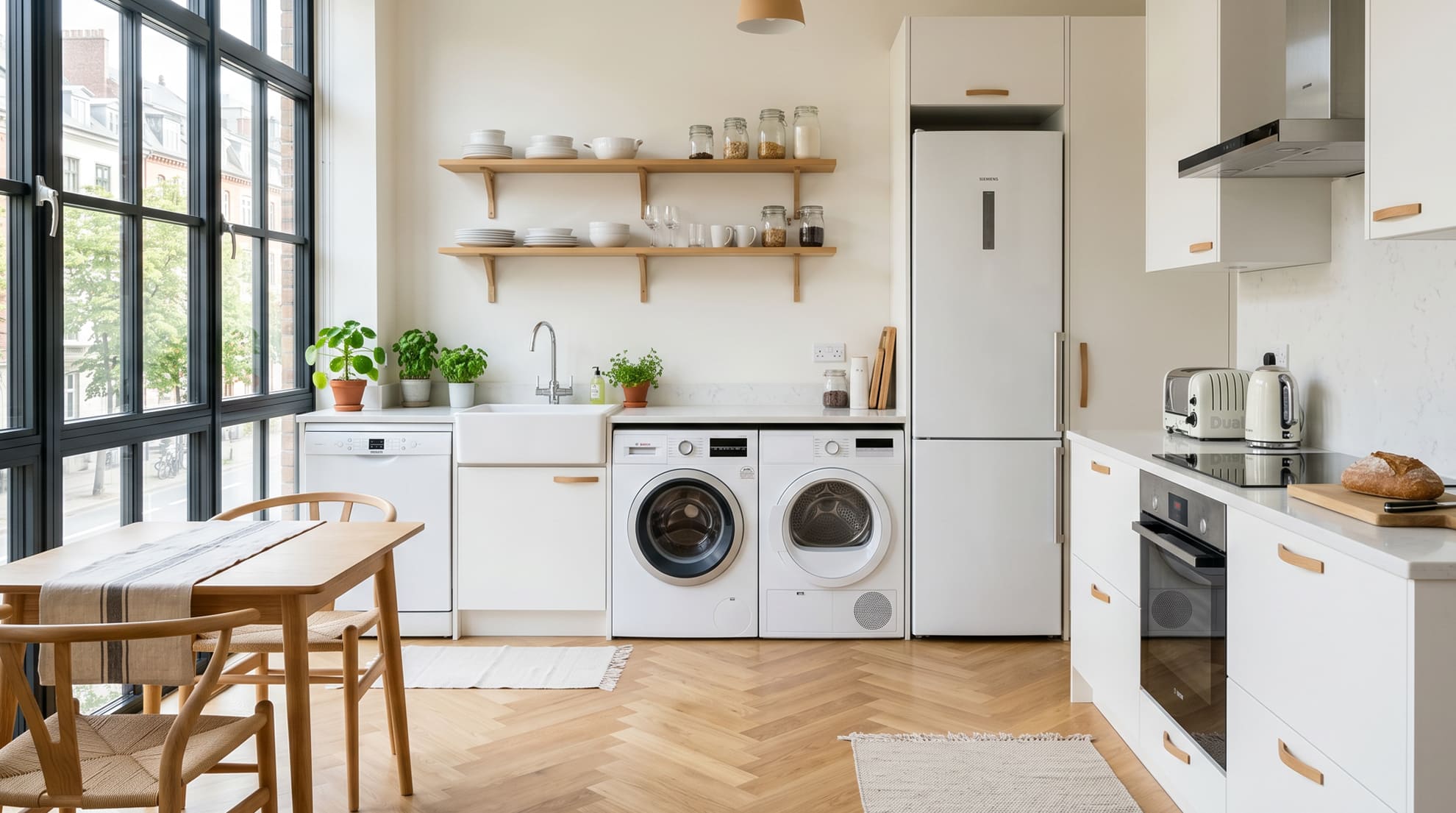
- Appliances — fridge (brand, size), washing machine (with or without dryer), AC type, dishwasher.
- Number of units per floor — matters a lot to anyone who values a quiet building.
- Elevator — passenger, service, or both; especially important for upper floors.
- Parking — on-site (free or assigned), underground, guest parking; be upfront if spots are hard to find in the evening.
- Transit access — not “near the subway”, but “7-minute walk to the metro station” or “5 minutes by bus, runs every 10 minutes”.
- Nearby amenities — schools, daycare, grocery stores, delivery lockers, gyms, parks.
- Less obvious perks — building management, concierge, video intercom, stroller storage, bike storage.
- Restrictions — are pets allowed (and what kind?), are children welcome, is smoking allowed on the balcony or in common areas.
The more of these are covered upfront, the fewer “quick questions” you’ll get — and the more likely the calls you do get are from people who already know the place fits their needs.
The Title Formula: Audience + Benefit + Price
The title is the first thing a renter sees. Generic titles like “1-bedroom apartment for rent” blend into a sea of identical listings. A title that immediately signals who the place is for and what its main advantage is stands out.
Formula:
[Target audience or situation] + [main benefit] + [price or location]Examples:
- “2-bed near a playground and school — great for families, $1,400/month”
- “Bright studio, 5 min to the metro — ideal for remote work, $900/month”
- “Quiet 2-bed with private parking — perfect for couples, $1,200/month”
What to avoid in a title:
- “urgent” — makes readers wonder what’s wrong;
- “negotiable” — invites price haggling before a viewing;
- unsupported superlatives like “best deal in the area” — without proof, it’s just noise.
Writing the Description: Turn Facts Into Benefits
Listing specs isn’t enough — each fact works much harder when it’s connected to how the renter will actually live day to day. The same set of facts can be presented flatly, or framed around real life — and the difference in response rate is significant.
| Fact | What it means for the renter |
|---|---|
| Bosch fridge, 300L | “Move in and start living — no need to buy appliances” |
| Windows facing a quiet courtyard | “Sleep with the windows open, even in summer” |
| Washer with built-in dryer | “Laundry done in a couple of hours, no need to hang anything” |
| Package lockers in the building | “Grab deliveries on your way home, no extra trips” |
| Playground in the courtyard | “Kids can play right outside, always in view” |
| Stroller storage on the ground floor | “No need to carry a stroller up the stairs every day” |
The more of these “fact → real-life benefit” connections you make, the easier it is for someone to picture themselves living there — which is the first step toward picking up the phone.
Lease Terms: Transparency Is a Competitive Advantage
A common worry is that spelling out fees and deposits upfront will scare people away. In practice, it’s the opposite — uncertainty is what scares people away. Someone who doesn’t understand the terms either calls with a dozen questions or simply moves on to a listing where everything is already clear.
What to state directly in the listing:
| Term | Example wording |
|---|---|
| Lease length | “Minimum 12-month lease” or “From 6 months, renewable” |
| Agency fee | “Agency fee: one month’s rent” or “No agency fee” |
| Pets | “Cats welcome”, “small dogs OK”, “no pets” |
| Children | “Families with children welcome” |
| Utilities | “Billed by meter, paid by tenant” or “Flat utility fee of $80/month” |
| Security deposit | “One month’s rent as deposit, refundable on move-out with no damages” |
| Parking | “Free parking on-site”, “underground parking available for an extra fee” |
| Elevator | “Passenger and service elevator” |
Example of how this can read in a listing:
“Lease terms: 12-month minimum lease, agency fee equal to one month’s rent, utilities billed by meter (typically $60–80/month), security deposit equal to one month’s rent. Children welcome, no pets. Free on-site parking, passenger elevator available.”
This kind of transparency filters out mismatched inquiries before they happen — so the calls you do get are far more likely to convert.
Transport and Neighborhood: Specifics Beat Generic Claims

For many renters, the deciding factor isn’t the renovation — it’s the commute. How long to work, to the nearest station, to the kids’ school.
Weak: “near the subway”, “close to downtown”, “great transit access”.
Strong: “7-minute walk to the metro”, “3 minutes by car to the main highway”, “bus stop right outside, 5 minutes to the metro”.
Worth adding:
- walking time to the nearest metro, train, or transit station;
- driving time to major roads or highways;
- public transit routes and frequency near the building;
- availability of taxis or ride-hailing pickup right outside.
Neighborhood amenities — tailored to the audience:
- for families — school (name, distance), daycare, clinic, playground;
- for younger renters — package lockers, food delivery coverage, cafes, gyms, entertainment;
- for remote workers — coworking spaces, parks, quiet walking areas.
Call to Action: Clear, Not Pushy
By the end of the listing, the reader should know exactly what to do next — otherwise they’ll just close the tab.
Good examples:
- “Message me — I can send a video walkthrough before you visit.”
- “Call or send a message — available for viewings this weekend.”
- “Let me know a time that works for you — happy to be flexible.”
Avoid:
- “Won’t last long, act fast” — creates pressure;
- “Serious inquiries only” — comes across as harsh;
- “Calls only between 9 and 6” — unnecessarily restrictive.
The best call to action offers a clear next step while leaving the timing and format up to the renter.
Examples: Weak, Average, and Strong Listings
Weak Listing
“1-bedroom apartment for rent in a new building. Nice renovation, beautiful kitchen. Near the subway. No pets. Call me.”
What’s missing:
- no price;
- no address or location reference;
- “nice renovation” and “beautiful kitchen” are opinions, not facts;
- “near the subway” — no distance or direction given;
- nothing about lease length, fees, utilities, or deposit;
- nothing about the neighborhood;
- weak call to action.
Average Listing
“1-bedroom apartment near the metro. $1,300/month. Recently renovated, has a fridge and washing machine. Kids OK, no pets. One month’s agency fee. Call me.”
What’s working: price, location reference, lease conditions on kids/pets, and the fee are all included.
What’s still missing: exact distance to transit, condition of utilities, elevator and parking info, neighborhood details, and a real call to action.
Strong Listing
Title:
“1-bed, 7-min walk to the metro — great for families, $1,300/month”
Description:
“7-minute walk to the metro, along a sidewalk with no road crossings. 37 m², 4th floor of 9, passenger elevator.
Condition: renovated in 2024 — repainted walls, Class 33 laminate flooring, plumbing updated in 2024. Kitchen (9 m²): fridge, 4-burner gas stove, microwave, dishwasher. Bedroom (16 m²): sofa bed, built-in wardrobe, desk. Separate bathroom, washer with dryer.
Lease terms: 12-month minimum lease, agency fee equal to one month’s rent ($1,300), utilities billed by meter (typically $60–80/month), security deposit equal to one month’s rent. Children welcome, no pets.
Why it’s convenient:
- daycare and elementary school 5 minutes away;
- package lockers right in the building;
- food delivery covers the area, 10–15 min average;
- playground and outdoor gym in the courtyard;
- free parking on-site, never an issue finding a spot;
- building has a concierge, video intercom, and on-site management.
Message me — happy to arrange a viewing at a time that works for you.”
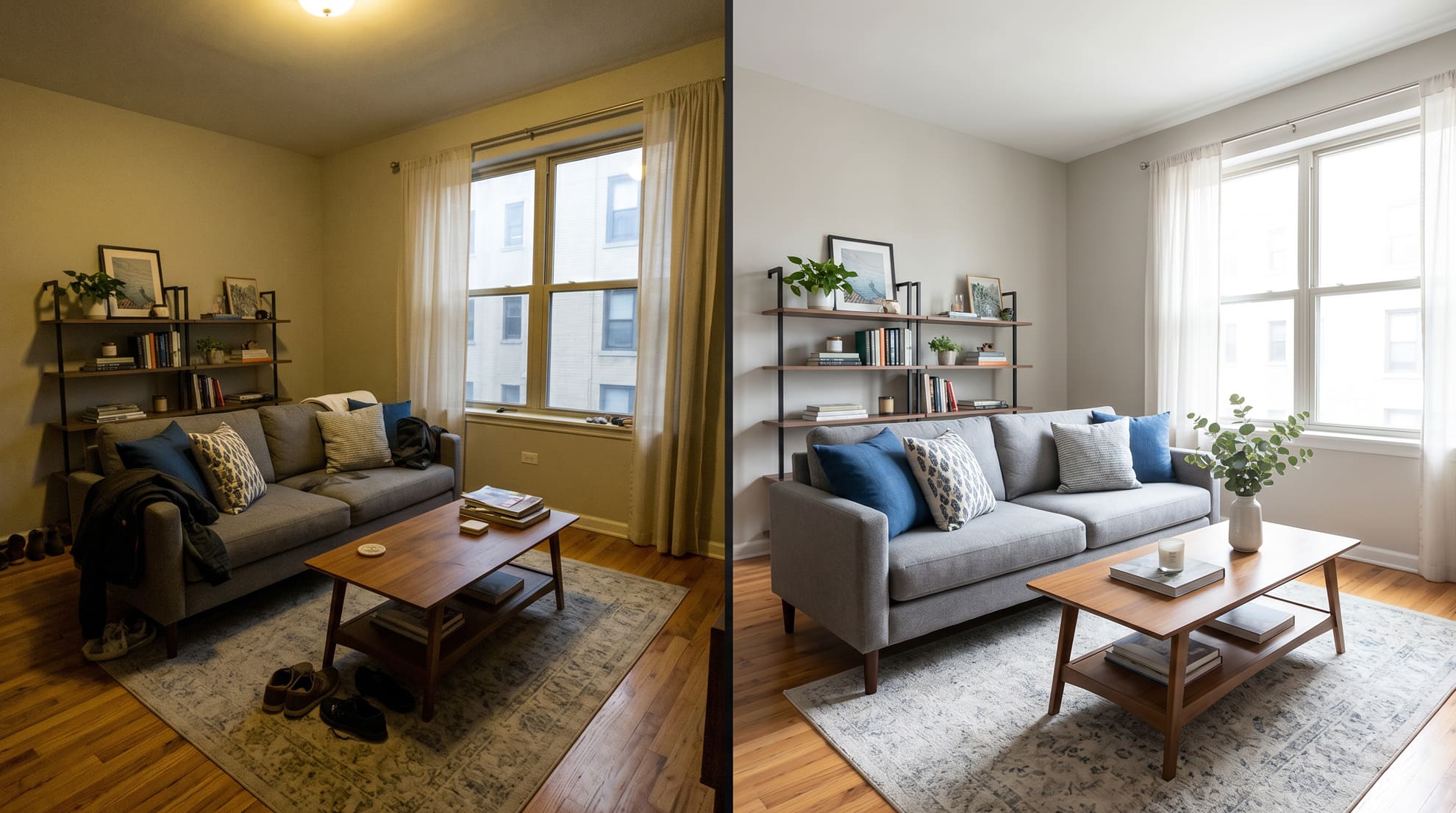
Why this works: the title immediately signals the audience and the benefit, opinions are replaced with facts throughout, all lease terms are disclosed upfront, the neighborhood details match the target audience (families), and the call to action is friendly and specific.
Pre-Publish Checklist
Before you publish, run through this list:
- The title points to a benefit or target audience.
- Price appears in the title or the first line.
- There’s an exact address or a clear location reference with travel time.
- Each room is described with facts: size, windows, furniture.
- Renovation and utility condition is stated, with year and materials.
- Appliances are listed: fridge, washing machine, stove, AC, dishwasher.
- Elevator and parking info is included.
- All lease terms are covered: length, fees, pets, kids, utilities, deposit.
- At least 2–3 facts about the neighborhood are included.
- There’s a clear, low-pressure call to action.
- The text is broken into short paragraphs with no spelling errors.
A listing that takes 15–20 minutes of thoughtful writing saves hours down the line: fewer repetitive calls, more qualified inquiries, and a faster path to closing the lease.