

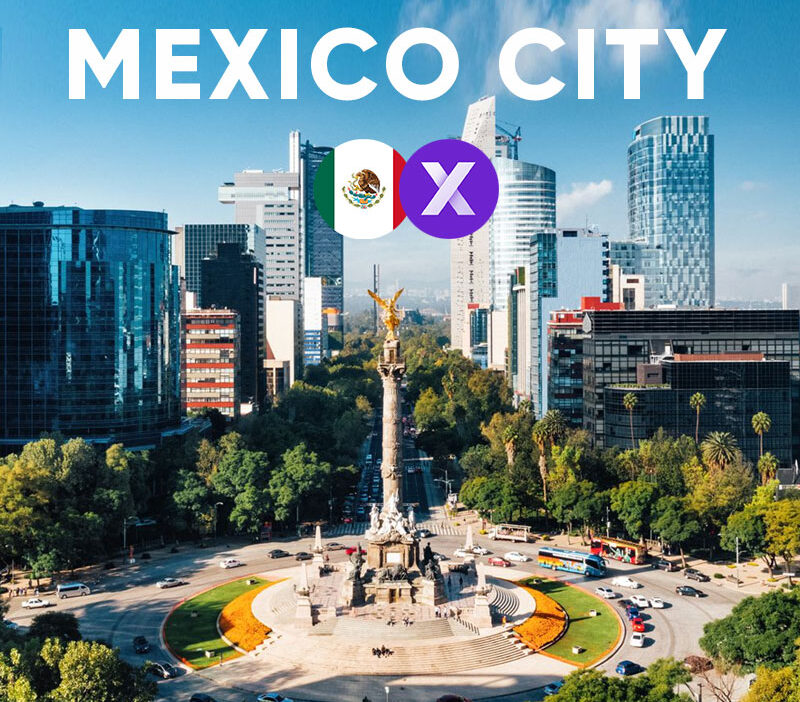
Mexico City (CDMX) is huge, chaotic, and full of contradictions — but once you settle in, it’s hard to imagine living anywhere else. The food is world-class, the rent is fair, the culture is deep, and the neighborhoods feel like small cities within a megacity. For many expats and remote workers, it’s the perfect blend of affordability, energy, and creativity.
Key Facts About Mexico City (CDMX)
| Parameter | Value |
|---|---|
| Population | ~9.2 million (city), ~22 million metro area |
| Language | Spanish (main), English in expat areas |
| Currency | Mexican Peso (MXN) |
| Average Rent | 12,000–25,000 MXN/month (~$650–1,300 USD) |
| Average Net Salary | 15,000–25,000 MXN ($850–1,400 USD) |
| Health Insurance | Private recommended (~$40–100/month) |
| Safety Level | Medium – varies by neighborhood |
| Public Transport | Metro, Metrobús, Uber. Monthly pass: 100 MXN ($6) |
| Climate | Mild highland – pleasant year-round |
| Residence Permit / Long Stay | Available through digital nomad visa, work, investment, family, etc. |
| Education | International schools and universities |
| Grocery Prices | Very affordable |
| Access to Nature | Mountains, volcanoes, historical sites nearby |
| City Atmosphere | Lively, cultural, historic, cosmopolitan |
Renting in Mexico City: Plenty of Options, if You Know Where to Look
CDMX is relatively affordable, especially compared to the U.S. or Europe — but prices are rising fast in popular expat zones like Roma or Condesa. Most rentals are furnished or semi-furnished, and leases usually range from 6–12 months.
Average monthly rent in 2025:
- Studio in Escandón or Narvarte: $500–700 USD
- 1-bedroom in Roma Norte or Condesa: $800–1,200 USD
- 2-bedroom in Polanco or Juárez: $1,300–2,000 USD
- Utilities: $50–100 USD/month
- Internet: ~$25 USD/month
- Deposit: 1–2 months of rent
Need a curated list of options? Explore long-term rentals in Mexico City — verified and updated listings.
Residency and Visas: Mexico Makes It Easy
Mexico offers some of the simplest residency options for long-term expats:
- Tourist visa – up to 180 days, but not renewable
- Temporary Resident Visa – valid for 1–4 years, requires financial solvency (~$2,600 USD monthly income or $43,000+ savings)
- Permanent Residency – after 4 years on temporary, or via pension/investment
- No digital nomad visa (yet), but many use the TR visa for remote work
The visa process is relatively fast and doesn’t require sponsorship or local contracts.
Language and Culture: Spanish is a Gateway
English is spoken in touristy and upscale neighborhoods, but basic Spanish is essential for daily life, paperwork, and local integration. Luckily, CDMX is a great place to learn — locals are patient and helpful.
The cultural scene is vibrant, intellectual, and alive — from Frida Kahlo’s house to rooftop jazz bars. People work hard, party late, and still somehow make time for family.
Where to Live in CDMX
- Roma Norte / Condesa – green, walkable, hip cafés and coworking
- Polanco – upscale, international, business-friendly
- Juárez – central, edgy, full of character
- Escandón / San Miguel Chapultepec – local charm, good value
- Coyoacán – historic, bohemian, slower pace
- Santa Fe – modern, corporate, car-dependent
- Narvarte / Del Valle – more local, safe, family-oriented
The Metro and Metrobus systems are reliable and cheap ($0.30 USD per ride), but rush hours are intense.
Top 5 Best Neighborhoods in Mexico City for Long-Term Living
| Neighborhood | Why It’s Great |
|---|---|
| 1. Condesa | Trendy, green, full of cafés, pet-friendly parks, and ideal for remote work. |
| 2. Roma Norte | Artsy, bohemian, full of life. Historic yet modern, great food scene. |
| 3. Polanco | Upscale, corporate, safe. International schools and embassies nearby. |
| 4. Coyoacán | Quiet, artistic, with a village feel. Affordable and full of heritage. |
| 5. Santa Fe | High-rises, business parks, top universities. Ideal for professionals and students. |
Cost of Living in CDMX
One of the biggest draws: you can live very well on a moderate budget.
- Rent: $700–1,500 USD/month
- Utilities: ~$75 USD/month
- Groceries: $150–250 USD/month
- Dining out:
- Coffee: $2 USD
- Tacos: $0.75 each
- Dinner for two: $30–60 USD
- Gym: ~$30–60 USD/month
- Coworking: ~$100–200 USD/month
- Private insurance: ~$50–100 USD/month
Expect to spend $1,500–2,500 USD/month for a comfortable lifestyle.
Work and Income
Most expats in Mexico City:
- Work remotely for foreign companies
- Teach English or languages
- Run creative or tech businesses
- Work in NGOs or international agencies
Coworking hubs are everywhere — especially in Roma and Polanco. Reliable fiber-optic internet is widely available.
| Profession | Avg. Gross Salary per Month (EUR) |
|---|---|
| Software Developer | €1,600 |
| IT Project Manager | €2,000 |
| UX/UI Designer | €1,400 |
| Architect | €1,300 |
| Mechanical Engineer | €1,500 |
| General Practitioner (Doctor) | €2,300 |
| Nurse | €1,000 |
| High School Teacher | €1,100 |
| Marketing Specialist | €1,400 |
| Accountant | €1,300 |
Healthcare: Affordable and High Quality
CDMX has both public and excellent private healthcare.
- Doctor visit (private): $30–60 USD
- Specialist: $50–100 USD
- Dental cleaning: ~$40 USD
- Emergency care: ~$100–300 USD
- Private insurance: ~$600–1,000 USD/year
Pharmacies are everywhere and often include walk-in clinics.
Final Thoughts: Is Mexico City Right for You?
It’s not the easiest city — traffic, noise, and pollution can be intense — but Mexico City rewards those who stay. It’s warm (in every sense), smart, creative, and always evolving.
If you want life with flavor, texture, and stories you’ll tell for years, CDMX is calling.
Also check out our article on Moving to Buenos Aires